
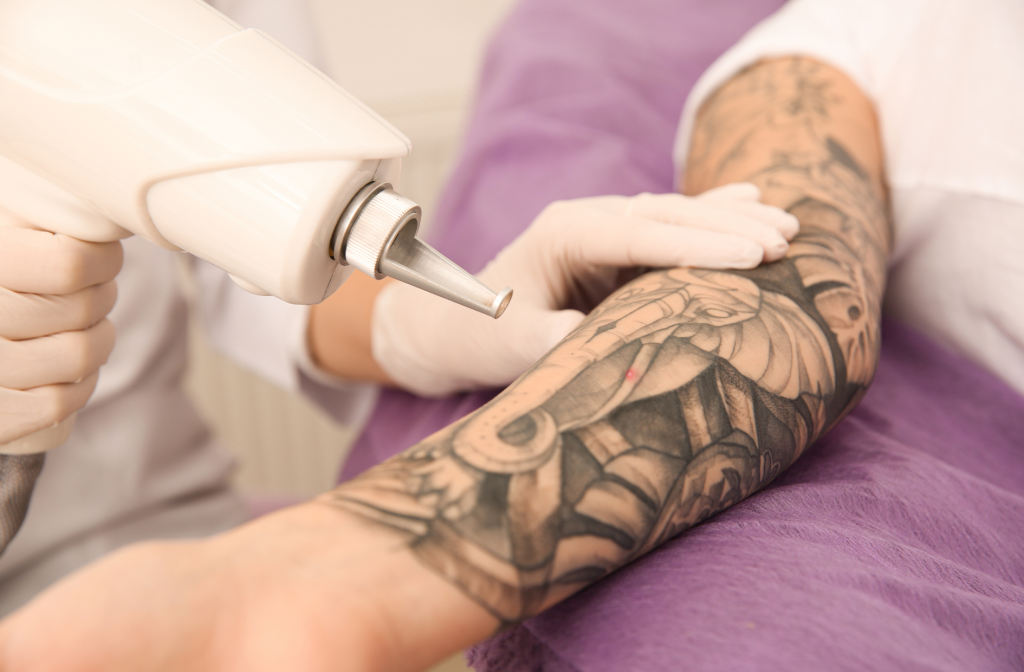
Detailed tattoos can be visually striking because they combine fine lines, intricate patterns, shading, and multiple elements within a limited area. When someone later decides that a detailed tattoo no longer suits their preferences, questions naturally arise about whether it can be faded effectively. Tattoo Removal Dubai is often considered by people who want to address unwanted ink while dealing with the complexity that comes with elaborate artwork. The level of detail in a tattoo can influence how it is approached, particularly when the design contains numerous lines, overlapping shades, or different ink tones.
What Makes Detailed Tattoos Different?
Detailed tattoos are often more visually complex than simple symbols, lettering, or basic shapes. They may contain several layers of visual information that contribute to the overall appearance.
- Fine lines and small artistic elements
- Multiple shades or colors
- Dense areas of ink alongside lighter sections
- Intricate patterns and overlapping imagery
- Delicate shading and highly defined outlines
Because of these characteristics, detailed tattoos require thoughtful consideration rather than being viewed as identical to simpler tattoo designs.
Can Tattoo Removal Address Intricate Designs?
Tattoo removal can be considered for intricate designs, including tattoos featuring extensive detailing. The suitability of fading depends on several characteristics of the individual tattoo rather than its artistic complexity alone. A detailed tattoo may contain areas with different levels of ink density.
The age, placement, ink characteristics, design density, and individual skin characteristics can also influence how appropriate tattoo removal may be. Therefore, the fact that a tattoo contains extensive detail does not automatically mean that it cannot be addressed.
Does Fine Line Detail Affect Tattoo Fading?
Fine-line tattoos are particularly distinctive because their appearance depends heavily on precision. Small details may form facial features, lettering, ornamental patterns, botanical elements, or geometric structures.
- Narrow outlines that define individual components
- Closely positioned decorative details
- Small areas of shading
- Delicate transitions between visual elements
- High dependence on line definition
Understanding these characteristics can help explain why detailed tattoo designs are often considered individually rather than grouped into one general category.
How Do Multiple Ink Colors Influence Consideration?
Color can add another layer of complexity to an elaborate tattoo. A design containing black, gray, red, blue, green, or other shades may have different considerations from a predominantly black tattoo. Colorful tattoos can also contain combinations of dark and light areas. A single design might include strong outlines, muted shading, bright decorative elements, and several contrasting tones.
For this reason, the presence of multiple colors can be an important factor when discussing tattoo fading. It is not enough to consider the overall appearance of the tattoo. Its individual colors and how they are distributed throughout the artwork can also be relevant.
Can Shading Make a Tattoo More Complex?
Some tattoos combine solid sections with softly shaded areas, while others use extensive gradients to create a realistic appearance. This variation means that the tattoo's appearance cannot always be judged simply by looking at how dark it seems overall.
The distribution of shading is therefore an important characteristic when considering tattoo fading. Two tattoos with similar dimensions may have very different levels of complexity because one uses simple outlines while the other contains extensive shading and layered artwork.
What Role Does Tattoo Size Play?
Size can be particularly relevant when discussing detailed tattoos. A small tattoo can contain an impressive amount of detail, but the same artistic elements may appear very differently when incorporated into a larger design. Large tattoos can include numerous visual sections, creating a broad composition with multiple focal points. Smaller detailed tattoos, on the other hand, may concentrate many elements into a compact area.
Size should therefore be considered together with design density. A large tattoo is not necessarily more difficult to address simply because it occupies more space, just as a small tattoo is not necessarily straightforward because of its dimensions.
Why Is Professional Assessment Important for Detailed Tattoos?
Intricate tattoos can contain too many variables to evaluate accurately through appearance alone. A professional assessment can take into account the tattoo's colors, density, size, placement, age, and the characteristics of the surrounding skin.
This is particularly useful when a tattoo includes several artistic techniques. A design combining fine lines, heavy outlines, shading, and multiple colors may require a more individualized evaluation than a simple monochrome symbol. Professional guidance can also help establish realistic expectations about what considerations apply to the specific tattoo rather than relying on generalized assumptions about tattoo fading.
What Should You Consider Before Fading a Detailed Tattoo?
Anyone considering tattoo fading should first think about the reason for wanting the tattoo changed. The goal might be complete removal, reduced visibility, modification, or preparation for a different artistic concept.
- The tattoo's dominant colors
- The density of its inked areas
- The amount of fine-line detailing
- The location and dimensions of the artwork
- The characteristics of the surrounding skin
- Whether certain tattoo elements should remain meaningful or visible
Having a clear objective can make conversations about tattoo removal more focused and practical.
Can Detailed Tattoo Designs Still Be Addressed?
Complexity does not automatically make a tattoo unsuitable for fading. Detailed artwork can be considered based on its individual characteristics, including color, density, shading, size, placement, and skin considerations.
At the same time, elaborate tattoos should not be compared directly with simple designs. Their multiple components can create additional factors that need to be evaluated individually. A realistic portrait, intricate sleeve, ornamental pattern, or detailed floral composition may each present a different set of considerations.
Final Thoughts
Tattoo removal can be considered for detailed tattoo designs, but intricate artwork deserves individualized attention because fine lines, shading, colors, density, placement, and size can all influence the overall assessment. A detailed tattoo is more than a single block of ink; it is a combination of artistic elements that may require careful consideration. Anyone thinking about fading an elaborate tattoo should focus on the facial characteristics of the specific artwork and their personal goals. With informed guidance from Dynamic Clinic Dubai, individuals can better understand the considerations associated with addressing detailed tattoos and make decisions that align with their preferences.